
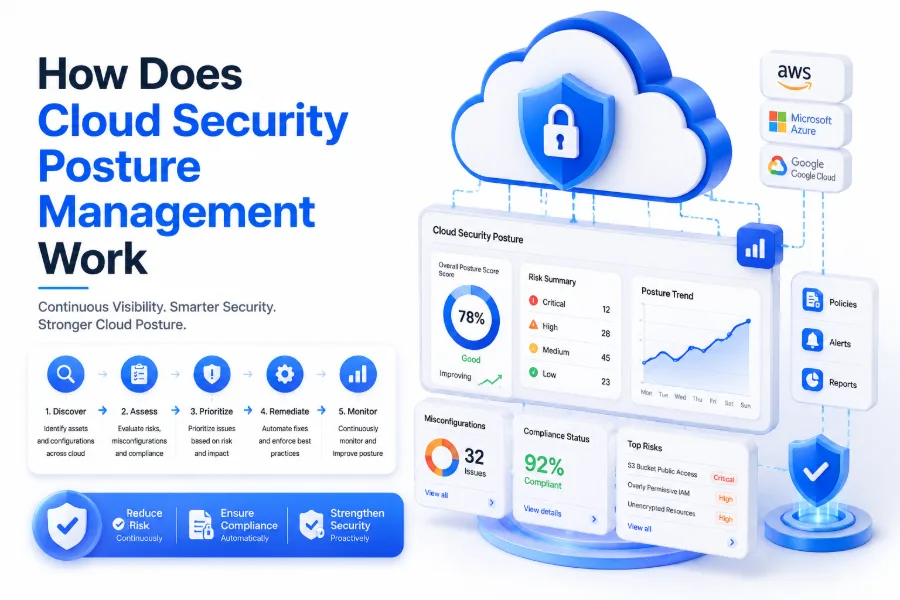
Cloud environments have changed how businesses store data, run applications, and manage digital operations. However, moving workloads to the cloud also introduces new security challenges, including misconfigured resources, compliance gaps, and hidden vulnerabilities. Organizations need better ways to monitor their cloud infrastructure and reduce potential risks before they become serious problems.
Cloud security posture management (CSPM) helps companies identify and fix security weaknesses across cloud platforms. It continuously checks cloud resources, compares settings against security standards, and provides recommendations to improve protection. But how does cloud security posture management work in real environments?
CSPM works by collecting information from cloud services, analyzing configurations, detecting risks, and helping security teams take corrective actions. It provides visibility into cloud assets while supporting compliance requirements and improving overall security management. As businesses continue adopting multi-cloud strategies, CSPM has become an important part of modern cloud security practices.
What Is Cloud Security Posture Management
Cloud security posture management is a security approach designed to monitor and protect cloud environments by identifying configuration errors, compliance issues, and security risks. CSPM solutions work across cloud platforms to help organizations maintain secure settings and reduce exposure to attacks.
Unlike traditional security tools that focus mainly on network protection, CSPM focuses on how cloud resources are configured and managed. It checks storage buckets, databases, virtual machines, identities, and other cloud components to find weaknesses that could create security problems.
CSPM platforms connect with cloud providers and continuously evaluate resources against security frameworks, company policies, and industry regulations. They help security teams understand where risks exist and what steps should be taken to improve cloud protection.
The main purpose of CSPM is not only finding problems but also helping organizations maintain a strong security posture over time. Cloud environments change frequently, so continuous monitoring is necessary to prevent new misconfigurations from creating vulnerabilities.
How Cloud Security Posture Management Works
Cloud security posture management works through several connected processes that collect cloud data, analyze configurations, identify risks, and support remediation. CSPM tools typically integrate with cloud platforms through APIs to gain visibility into available resources and their security settings.
Once connected, the platform gathers information about cloud assets, permissions, network settings, storage configurations, and access controls. It then compares this information against predefined security rules and compliance requirements to identify possible issues.
Cloud Asset Discovery and Monitoring
The first step in CSPM is discovering all cloud resources within an organization’s environment. This includes identifying servers, containers, databases, applications, storage systems, and user permissions across different cloud accounts.
Continuous monitoring allows CSPM solutions to detect changes as they happen. For example, if a storage bucket becomes publicly accessible or a user receives excessive permissions, the system can quickly identify the change and alert security teams.
Security Configuration Analysis
After collecting cloud data, CSPM tools analyze configurations to determine whether resources follow security best practices. They check settings such as encryption, authentication controls, network access rules, and identity permissions.
If a configuration does not meet security requirements, the CSPM platform creates alerts and provides details about the issue. This allows teams to prioritize important risks instead of manually reviewing thousands of cloud settings.
Key processes involved in CSPM include:
- Cloud resource discovery across multiple environments
- Continuous configuration monitoring
- Risk identification and security assessment
- Compliance policy evaluation
- Automated alerts and remediation support
- Security posture reporting
How CSPM Identifies Cloud Security Risks
CSPM identifies risks by comparing cloud configurations with security benchmarks and organizational policies. These comparisons help reveal weaknesses that attackers may exploit, such as open databases, weak access controls, or missing encryption.
Many CSPM solutions use automated scanning methods to review large cloud environments quickly. Instead of relying on manual security checks, organizations receive continuous assessments that highlight potential problems as they appear.
Common risks detected by CSPM include misconfigured storage services, excessive user permissions, unsecured network connections, and resources that fail compliance requirements. Early detection helps businesses reduce the chances of data exposure and unauthorized access.
Risk Prioritization and Security Scoring
Finding security issues is only one part of cloud protection. CSPM platforms also help organizations prioritize risks based on severity, business impact, and possible attack paths.
A publicly exposed database containing sensitive information would usually receive a higher priority than a minor configuration issue. This risk-based approach helps security teams focus their efforts on problems that require immediate attention.
Compliance Monitoring
Many organizations must follow security standards and regulations related to data protection. CSPM tools support compliance by continuously checking whether cloud environments meet required controls.
They can evaluate cloud systems against frameworks such as CIS Benchmarks, ISO standards, and other industry requirements. Automated compliance monitoring reduces the workload involved in preparing audits and maintaining security documentation.
Important benefits of CSPM risk monitoring:
| Benefit | How It Helps |
|---|---|
| Continuous visibility | Shows what cloud resources exist and how they are configured |
| Faster risk detection | Finds security problems before attackers exploit them |
| Compliance support | Helps maintain required security standards |
| Better prioritization | Focuses attention on high-impact risks |
| Reduced manual work | Automates repetitive security checks |
The Role of Automation in CSPM
Automation plays a major role in cloud security posture management because modern cloud environments are too large for manual monitoring. CSPM platforms automatically scan resources, detect problems, and provide recommendations without requiring constant human review.
Automated workflows allow security teams to respond faster when issues appear. Some CSPM solutions can automatically fix certain low-risk problems, such as changing insecure settings or removing unnecessary permissions.
However, automation does not replace security professionals. Human review remains important for complex decisions, business requirements, and security strategies. CSPM works best when combined with skilled security teams and proper cloud governance.
Automated Remediation Capabilities
Automated remediation allows CSPM tools to correct specific security issues without waiting for manual action. For example, a system may automatically disable an exposed resource or adjust a risky configuration based on predefined rules.
Organizations often use automated remediation carefully because incorrect changes can affect applications. Security teams usually define policies that determine which issues can be fixed automatically and which require approval.
CSPM in Multi-Cloud Environments
Many businesses use multiple cloud providers to improve flexibility and avoid dependence on a single platform. However, managing security across different environments can become complicated without centralized visibility.
CSPM solutions help organizations monitor multiple cloud platforms from one location. They provide a consistent security view across different services, making it easier to identify risks and maintain security policies.
Multi-cloud CSPM monitoring can include environments from major providers such as Amazon Web Services, Microsoft Azure, and Google Cloud. This centralized approach reduces complexity and helps security teams maintain stronger controls.
Challenges of Multi-Cloud Security Management
Managing multiple cloud environments creates several challenges, including different security settings, access models, and compliance requirements. Without proper monitoring, organizations may overlook important vulnerabilities.
CSPM helps address these challenges by creating unified reports, security assessments, and policy checks. This gives teams better control over complex cloud infrastructures.
Common multi-cloud security challenges include:
- Different cloud provider configurations
- Inconsistent security policies
- Limited visibility across environments
- Complex identity management
- Increased compliance requirements
CSPM Compared With Other Cloud Security Tools
CSPM is one part of a larger cloud security strategy. While it focuses on cloud configurations and security posture, other tools address different areas such as workload protection, identity security, and threat detection.
For example, cloud workload protection platforms focus on securing applications and workloads, while cloud access security brokers monitor user activity and data movement. Organizations often combine multiple security technologies for stronger protection.
CSPM provides the foundation by ensuring that cloud resources are configured securely from the beginning. It helps prevent security weaknesses that could later lead to larger incidents.
CSPM and Cloud Workload Protection
Cloud workload protection focuses on protecting applications, containers, and computing environments from active threats. CSPM focuses more on preventing security issues caused by incorrect settings or poor configurations.
Both solutions work together. CSPM reduces exposure by improving configurations, while workload protection detects and responds to threats affecting running applications.
CSPM and Identity Security
Identity management is a major concern in cloud security because unauthorized access can lead to serious breaches. CSPM checks identity-related configurations, including excessive permissions and insecure access policies.
By identifying permission problems early, CSPM helps organizations follow the principle of least privilege and reduce unnecessary access risks.
Best Practices for Using CSPM Effectively
Implementing CSPM requires more than installing a security tool. Organizations need clear policies, regular monitoring, and proper processes for handling security findings.
A successful CSPM strategy combines technology with security practices that match business needs. Teams should regularly review alerts, update policies, and improve cloud governance.
Practical CSPM Best Practices
Organizations can improve CSPM effectiveness by following these approaches:
- Define clear cloud security policies
- Monitor all cloud accounts and resources
- Prioritize high-risk findings first
- Review user permissions regularly
- Automate safe security fixes
- Train teams on cloud security practices
- Connect CSPM findings with security workflows
These practices help companies maintain better control over cloud environments while reducing security risks caused by rapid cloud changes.
Common Mistakes When Using CSPM
Although CSPM provides valuable security visibility, organizations can make mistakes that reduce its effectiveness. One common issue is ignoring alerts because of excessive notifications.
Security teams should configure CSPM policies carefully to reduce unnecessary alerts. A focused approach helps teams identify important issues without becoming overwhelmed.
Another mistake is treating CSPM as a complete security solution. CSPM improves cloud posture but should be combined with other security controls, including identity management, threat monitoring, and incident response planning.
Conclusion
Cloud security requires continuous attention because cloud environments change frequently and new risks can appear at any time. CSPM helps organizations maintain better visibility, identify weaknesses, and improve security practices across their cloud infrastructure.
By scanning configurations, monitoring resources, checking compliance requirements, and supporting remediation, cloud security posture management works as an essential layer of protection for modern businesses. It allows security teams to find problems earlier and maintain stronger control over complex cloud environments.
Organizations that adopt effective CSPM practices can reduce configuration risks, improve compliance readiness, and create a more secure foundation for cloud operations. As cloud adoption continues to grow, having a reliable way to manage security posture will remain an important part of protecting digital assets.
FAQ
What does CSPM stand for in cloud security
CSPM stands for Cloud Security Posture Management. It refers to tools and practices that monitor cloud environments, identify security risks, and help organizations maintain secure configurations.
Why is CSPM important for businesses
CSPM helps businesses detect cloud misconfigurations, reduce security risks, support compliance requirements, and improve visibility across complex cloud environments. It allows teams to address problems before they become major security incidents.
How does CSPM find security issues
CSPM finds security issues by scanning cloud resources, analyzing configurations, comparing settings against security standards, and identifying weaknesses such as exposed services, weak permissions, and compliance violations.
Can CSPM automatically fix security problems
Many CSPM platforms offer automated remediation features for specific issues. However, organizations usually control which fixes happen automatically to prevent unwanted changes to important cloud resources.
Is CSPM enough to secure cloud environments
CSPM improves cloud security posture but is not a complete security solution. Organizations should combine it with identity protection, threat detection, vulnerability management, and strong security policies.
0 Comments